If all the happiness I have ever known, would be all that I would ever own It would be all right, it would be okay, because happiness has been mine since you came my way... For there is love and then there is love, and the love you gave me came straight from heaven above, Kisses like yours are the sweetest kind, when I think of them, an angel comes to mind!
If suddenly my life came to an end, and of good things there would be no more, it would not matter, because of the best, I have tasted and that's for sure Kisses sweet as the finest wine were the kind that made my life so divine... For in your warm arms, I found complete bliss, you always saw that I had much happiness, I could not look back and feel so bad, you can't do that when you've got the best that can be had!
And with these wonderful thoughts in mind, I just had to send you this romantic valentine To tell you that I loved you yesterday, and today I do, and I will tomorrow too... This card is not empty, it contains my heart full of love, to let you know it's you I am thinking of, And it is my fondest wish today, to wish you a very wonderful and happy Valentine's Day!
Some say it's mysterious, magical, complex, difficult, imaginary, thought-provoking, inspirational, intuitional, joyous, immeasurable, ecstasy, and undefinable. Perhaps.
In one of Dr. John Gray's audio cassettes he defines love as follows: "Love is a feeling directed at someone which acknowledges their goodness."
On the same cassette, he refers to the definition by M. Scott Peck: "The willful intent to serve the well being of another."
Love is patient, love is kind. It does not envy, it does not boast, it is not proud. It is not rude, it is not self-seeking, it is not easily angered, it keeps no record of wrongs. Love does not delight in evil but rejoices with the truth. It always protects, always trusts, always hopes, always perseveres. - 1 Corinthians 13:5-7
My favorite is by Paramahansa Yogananda: "To describe love is very difficult, for the same reason that words cannot fully describe the flavor of an orange. You have to taste the fruit to know its flavor. So with love."
Love itself is a universal experience. Yet, every individual occurrence - while perhaps bound by a common thread - seems absolutely unique. Love is what love is! To everyone it expresses itself differently.
It can run for hours at 20 metres per minute without getting tired. It lives longer, has more sex, and eats more without gaining weight. Could the science that created this supermouse be applied to humans?
By Steve Connor, Science Editor
Published: 02 November 2007
Scientists have been astounded by the creation of a genetically modified "supermouse" with extraordinary physical abilities – comparable to the performance of the very best athletes – raising the prospect that the discovery may one day be used to transform people's capacities.
The mouse can run up to six kilometres (3.7 miles) at a speed of 20 metres per minute for five hours or more without stopping. Scientists said that this was equivalent of a man cycling at speed up an Alpine mountain without a break. Although it eats up to 60 per cent more food than an ordinary mouse, the modified mouse does not put on weight. It also lives longer and enjoys an active sex life well into old age – being capable of breeding at three times the normal maximum age.
American scientists who created the mice – they now have a breeding colony of 500 – said that they were stunned by their abilities, especially given that the animals came about as a result of a standard genetic modification to a single metabolism gene shared with humans.
They emphasised that the aim of the research was not to prepare the way to enhance the genes of people. However, they accepted that it may be possible to use the findings to develop new drugs or treatments that could one day be used to "enhance" the natural abilities of athletes.
The professor of biochemistry at Case Western Reserve University at Cleveland in Ohio, Richard Hanson, said that the physical performance of the supermouse can only be compared to supremely fit athletes like the cyclist Lance Armstrong, who won the Tour de France seven consecutive times from 1999 to 2005. The genetic alteration to a gene involved in glucose metabolism appears to stimulate the efficient use of body fat for energy production. At the same time, the mice do not suffer from a build up of lactic acid – which causes muscle cramps – a feature also seen in the best endurance athletes.
Professor Hanson said yesterday: "They are metabolically similar to Lance Armstrong biking up the Pyrenees. They utilise mainly fatty acids for energy and produce very little lactic acid. They are not eating or drinking and yet they can run for four or five hours. They are 10 times more active than ordinary mice in their home cage. They also live longer – up to three years of age – and are reproductively active for almost three years. In short, they are remarkable animals.
"On the downside, they eat twice as much as control mice, but they are half the weight, and are very aggressive. Why this is the case, we are not really sure."
Professor Hanson, who led the 15-strong team of researchers, said that the first supermouse was created about four years ago by injecting a highly active form of a gene for an enzyme called phosphonenolpyruvate carboxykinase (PEPCK-C) into a mouse embryo. The results of studies on the mice are published for the first time today in the Journal of Biological Chemistry.
Professor Hanson said: "We humans have exactly the same gene. But this is not something that you'd do to a human. It's completely wrong. We do not think that this mouse model is an appropriate model for human gene therapy. It is currently not possible to introduce genes into the skeletal muscles of humans and it would not be ethical to even try."
However, it may be possible for pharmaceutical companies to use the findings to develop new drugs that enhance muscle performance, which may benefit certain patients. Professor Hanson accepted that it was possible athletes might misuse any future drug developed in this way.
He said: "It's very possible. It's a different approach to putting a gene into a human. I would only do that to help anyone who suffers from disorders such as cystic fibrosis."
The aim of the research was to gain a greater understanding of the PEPCK-C enzyme, which is present mainly in the liver and kidneys. As a result of the genetic modification, the mighty mice have up to 100 times the concentration of the enzyme in its muscles compared with ordinary mice.
Professor Hanson said: "The purpose of our experiment was to study energy metabolism in the mice and the role that a single, metabolically important enzyme might play in a tissue in which it is not normally expressed at high levels."
He said that the physical and behavioural changes in the modified mice were completely unexpected. Usually, scientists have to carry out blood tests to see if there has been any effect of altering the genes, but these mice were noticeably different at a very early age.
He said: "We could spot them at just a few weeks after birth. They popped around the cage like popcorn. We found that they were about 10 times as active as ordinary mice."
Further research on the mice could shed light on the link between high-calorie diets and cancer, and low-calorie diets and longevity. He said: "Our animals live longer and eat almost twice as much as ordinary mice – this is a model to study."
A risky business: previous attempts at genetic modification
Genetic modification is a 30-year-old technology that has been used extensively on a range of animals for basic research and the production of agricultural or pharmaceutical products. It involves inserting an extra gene or modifying the expression of an existing gene within the DNA of the animal. Famous examples of GM animals include:
The Beltsville pig
An early experiment involving the insertion of a gene for human growth hormone into pigs to make them grow faster. They suffered severe bone and joint problems and could not walk properly without pain.
Oncomouse
Created by scientists at Harvard. Engineered to develop cancer, it enabled researchers to use it as a model of the disease. It was involved in one of the earliest patent applications on an animal.
Knock-out mice
Probably the most common use of genetically modified animals. The mice have a gene modified or destroyed so that scientists can study the outcome. Has created a revolution in the understanding of mammalian genes.
Spider-silk goats
Spider-silk protein gene is inserted into goats to extract the substance from their milk. The silk is stronger than steel, so could be used in industry.
Spinach pigs
Japanese scientists have created pigs with an added gene from spinach. They say it cuts fat – making them healthier to eat.
Humanised cattle
A range of experiments have tried to introduce important human genes into cattle so that pharmaceutical proteins can be extracted from their milk.
The green pig
Scientists are trying to introduce a bacterial gene into pigs that will make their faeces less toxic, cutting farm pollution.
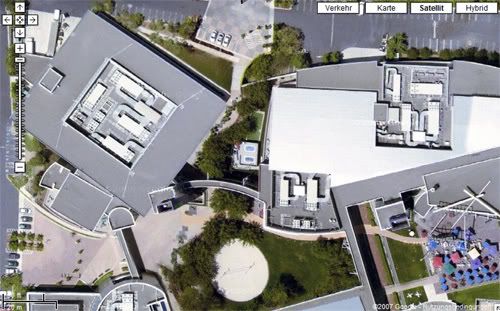
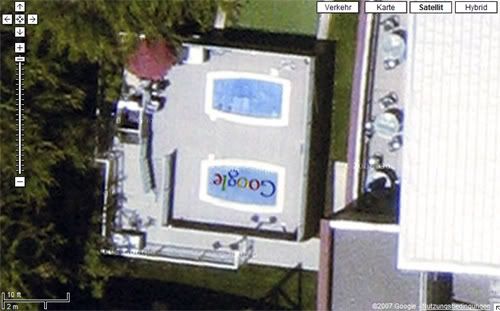
Select a location and switch to satellite view. Zoom in as far as you can, and click ‘link to this page’ at the top right. Now replace the ‘z’ parameter in the URL with a higher value, e.g. 20, 22, or 23, and wait. Some locations will now show more detailed imagery.
It is somewhat hard to find spots with the super mega google zoom … But I bet soon the whole world will have that resolution. Scary and even scarier when you think about Google Live Maps!
Of course The Google Complex at Silicon Valley has that high res option.
إن الإنسان قبـل الحب شيء وعنـد الحب كل شيء وبعـد الحب لا شيء
الحـــــــــب تجربة وجودية عميقة تنتزع الإنسان من وحدته القاسية الباردة لكي تقدم له حرارة الحياة المشتركة الدافئة
تجربة إنسانية معقدة … وهو أخطر وأهم حدث يمر في حياة الإنسان لأنه يمس صميم شخصيته وجوهره ووجوده … فيجعله يشعر وكأنه ولد من جديد
هو الذي ينقل الإنسان إلى تلك الواحات الضائعة من الطهارة والنظارة والشعر والموسيقى لكي يستمتع بعذوبة تلك الذكريات الجميلة التائهة في بيداء الروتين اليومي الفضيع وكأنما هي جنات من الجمال والبراءة والصفاء في وسط صحراء الكذب والتصنع والكبرياء.
وهو كالبحر حين تكون على شاطئه يقذفك بأمواجه بكرم فائق يستدرجك بلونه وصفائه وروعته ولكن حين تلقي بنفسك بين أحضانه لتبحث عن درره يغدر بك ويقذفك في أعماقه ثم يقذف بك وأنت فاقد لإحساسك
لا ينطق عن الهوى وإنما هو شعور وإحساس يتغلغل في أعماقنـا الحب مرآة الإنسان يعكس ما بداخلنا من عمق الوصف والخيال
الحــــــــــــــــب كأحلام على ارض خرافية يلهينا عن الحاضر يشدنا ويجذبنا فيعجبنا جبروته بالحب نحيا فهو الروح للجسد فلا حياة بدونه وهو الأمل الذي يسكن أنفاسنا ويخاطب أفكارنا ليحقق آمالنا هو سفينة بلا شراع تسير بنا إلى شاطئ الأمـان، سماء صافيه وبحراً هادئ وبسمة حانية، يزلزل الروح والكيان ويفجر ثورة البركان
أخيراً الحب أسطـورة تعجـز البشريـة عـن إدراكهــا إلا لمن صــدق في نطقهــا ومعناهـــا الحب يقراء والحب يسمــع والحب يخاطبنــا ونخاطبــهويسعدنــا ونسعــده وهو عطـراً وهمساً نشعـر بسعادتـه إذا صدقنـاه في أقوالنـاوأفعالنــا بالحب تصبح ا لحياة جميلة لكي نحقق أهدافــاً قـد رسمناهــا ولكن ما يقلق العاشقين فقط هـــو احتمال أن تكـون الأقـدار تخبئ لهـم فراقـاً لم يكن في حسبــان أي منهــم







 Posts
Posts